New Jersey Benchmarking 2026: As September Approaches, Is Your Building Really Done?

The July 1, 2026 New Jersey energy and water benchmarking deadline is now well behind us.
As September approaches, building owners and property managers should be asking a different question:
Is the 2026 benchmarking requirement actually complete, or was the filing simply started and forgotten?
For covered commercial buildings over 25,000 square feet, now is the time to verify reporting status, correct unresolved data issues, and clean up any outstanding 2026 benchmarking work before the year gets away from you.
At The Cotocon Group, we help owners confirm building coverage, review ENERGY STAR Portfolio Manager data, troubleshoot reporting issues, and manage benchmarking across individual properties and entire portfolios.
The Deadline Passed Months Ago. Why Benchmarking Still Matters Now
The July 1 deadline may have passed, but unresolved benchmarking issues do not become less important with time.
In fact, the longer a problem sits, the harder it can become to trace missing utility data, ownership changes, incorrect property information, or incomplete Portfolio Manager records.
By late August and early September, owners should know whether each covered building has:
- complete 2025 energy data;
- complete water data;
- an accurate ENERGY STAR Portfolio Manager profile;
- correct building-use and square-footage information;
- all applicable meters entered;
- data-quality issues resolved; and
- a clear record showing that the 2026 reporting process was completed.
If nobody on your team can confirm those items, the building deserves another look.
Who Is Covered by New Jersey Benchmarking?
New Jersey’s annual benchmarking requirement generally applies to commercial buildings larger than 25,000 square feet.
For the 2026 reporting season, covered properties were required to benchmark their 2025 calendar-year energy and water consumption.
| Requirement | 2026 Reporting Season |
| Building threshold | Commercial buildings over 25,000 sq. ft. |
| Reporting year | 2025 energy and water use |
| Filing deadline | July 1, 2026 |
| Benchmarking platform | ENERGY STAR Portfolio Manager |
| Compliance tracking | BEAM |
| Frequency | Annual |
The important point now is not simply whether your property was supposed to report.
It is whether the building’s reporting record is complete and defensible.
September Is a Good Time to Audit Your 2026 Filing
Late summer is often when building teams discover that a filing was assumed to be complete but still has loose ends.
Common issues include:
- missing utility months;
- incomplete water consumption;
- incorrect meter assignments;
- duplicate Portfolio Manager records;
- outdated property characteristics;
- wrong gross floor area;
- property-use errors;
- ownership changes;
- missing historical utility records; and
- buildings appearing on the Covered Building List that were not being actively tracked.
These problems are easier to address now than at the end of the year or during the next reporting cycle.
A September compliance review gives owners time to fix 2026 issues and improve the process before 2027 benchmarking begins.

The Covered Building List Should Be Reviewed Again
The New Jersey Energy and Water Benchmarking Covered Building List is now available through the BEAM platform.
For owners and property managers, this creates a useful opportunity to verify which buildings are being treated as covered.
Do not assume that last year’s internal property list is automatically correct this year.
Coverage issues can arise from:
- acquisitions;
- dispositions;
- building consolidations;
- changes in recorded square footage;
- ownership transitions;
- address inconsistencies; and
- property records that were never updated internally.
For portfolio owners, the Covered Building List should be compared against the company’s own property records before the year closes.
Cotocon can perform this review across an entire portfolio and identify buildings that may require follow-up.
Filing Is Only One Part of Compliance
One of the biggest mistakes owners make is treating benchmarking as a simple submission exercise.
The quality of the underlying data matters.
An ENERGY STAR Portfolio Manager record can technically exist while still containing inaccurate information.
Common examples include:
- utility accounts linked to the wrong property;
- meters covering only part of the year;
- outdated property-use information;
- incomplete tenant data;
- incorrect square footage;
- duplicate meters;
- incorrect start and end dates; and
- unusually high or low consumption left unexplained.
A benchmarking record should be reviewed as a building-performance dataset, not simply as paperwork.
Why Accurate Benchmarking Data Matters
Reliable benchmarking gives ownership a year-over-year record of how the property is operating.
That information can help identify:
- rising utility costs;
- unexpected energy consumption;
- unusual water usage;
- deteriorating building performance;
- potential scheduling or control problems;
- properties that need further investigation; and
- buildings that may benefit from operational or capital improvements.
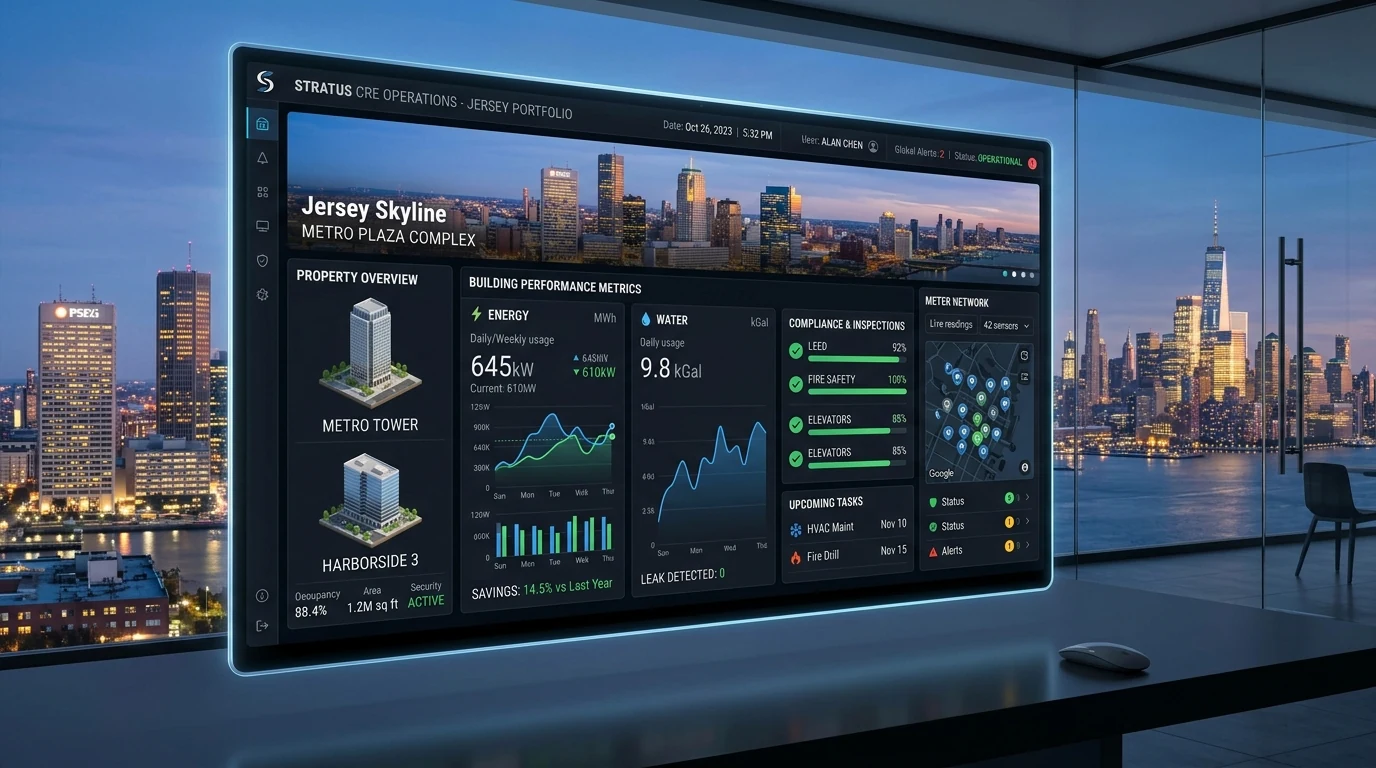
For large portfolios, benchmarking data becomes even more valuable because owners can compare properties against one another.
That helps answer an important management question:
Which buildings deserve attention first?
What Owners Should Do Before the End of 2026
As September approaches, there is still enough time to clean up the current reporting cycle and prepare for the next one.
Building owners should consider five steps.
Confirm Every Covered Property
Review the Covered Building List and compare it against your internal portfolio.
Do not rely solely on previous-year assumptions.
Verify 2026 Reporting Status
Determine whether each covered property actually completed the 2026 benchmarking process.
Review Data Quality
Check energy, water, meters, building information, square footage and reporting periods.
Resolve Outstanding Issues
Correct missing or inaccurate data while records are still reasonably easy to retrieve.
Build the 2027 Process Now
The next reporting cycle will arrive quickly.
Establishing utility access, Portfolio Manager ownership, internal responsibilities and a repeatable reporting workflow now can prevent another last-minute rush next year.
Own Multiple Buildings? Benchmarking Should Be Managed at the Portfolio Level
For owners managing multiple New Jersey properties, benchmarking should not be treated as a building-by-building scramble every spring.
A better approach is to maintain one structured portfolio process.
That process should include:
- annual Covered Building List review;
- building inventory verification;
- utility-account coordination;
- Portfolio Manager maintenance;
- monthly or periodic data checks;
- annual reporting preparation;
- data-quality review; and
- final compliance verification.
The Cotocon Group can manage this process across an entire New Jersey portfolio.
That gives ownership one central compliance workflow instead of relying on multiple property managers, utility contacts, consultants and disconnected spreadsheets.
Missed the July 1 Deadline? Do Not Wait Until 2027
If your building has not completed its 2026 benchmarking requirement, the worst approach is to ignore it until the next reporting season.
Instead, determine:
- whether the property is covered;
- what information has already been submitted;
- what information is missing;
- whether Portfolio Manager is accurate;
- whether utility data is complete; and
- what needs to be corrected.
The objective should be to close out the 2026 cycle cleanly.
Waiting until next spring only creates a larger backlog.
Already Filed? Perform a Quick Compliance Check
Even buildings that were reported before July 1 should be reviewed.
Ask:
- Do we have all 12 months of 2025 energy data?
- Is the water data complete?
- Are all meters accounted for?
- Is the gross floor area correct?
- Is the property-use information accurate?
- Are there duplicate or inactive meters?
- Were any data-quality warnings left unresolved?
- Can we clearly document that the 2026 reporting requirement was completed?
If the answer to any of those questions is uncertain, a review is worthwhile.
How The Cotocon Group Helps
The Cotocon Group works with New Jersey building owners, property managers and portfolio operators to manage benchmarking from start to finish.
Our team can assist with:
- Covered Building List review;
- compliance-status verification;
- ENERGY STAR Portfolio Manager setup;
- existing Portfolio Manager cleanup;
- utility-data coordination;
- energy and water data review;
- meter troubleshooting;
- building-information verification;
- reporting preparation;
- BEAM status review;
- unresolved 2026 filing issues; and
- portfolio-wide annual benchmarking management.
Our goal is not simply to submit data.
It is to give ownership a reliable annual compliance process and a cleaner record of building performance.
September Is the Right Time to Get Ahead
The 2026 reporting deadline has passed.
The next deadline will come sooner than it feels.
Owners who use the remainder of 2026 to resolve outstanding issues, clean up Portfolio Manager records, verify building coverage and organize utility data will be in a much stronger position next year.
Those who wait until spring may find themselves repeating the same last-minute process.
If you are unsure whether your building’s 2026 New Jersey benchmarking requirement is fully complete, The Cotocon Group can review it now.
Need a New Jersey Benchmarking Compliance Review?
The Cotocon Group can review your building or portfolio, confirm coverage, identify outstanding reporting issues and help prepare your properties for the next benchmarking cycle.
Schedule a consultation with The Cotocon Group today.
Review My 2026 Benchmarking Status